
Do I Need a Plasterer Before Painting?
One of the most common questions homeowners ask before decorating. The honest answer is: sometimes yes, often no — and knowing the difference saves you real money.
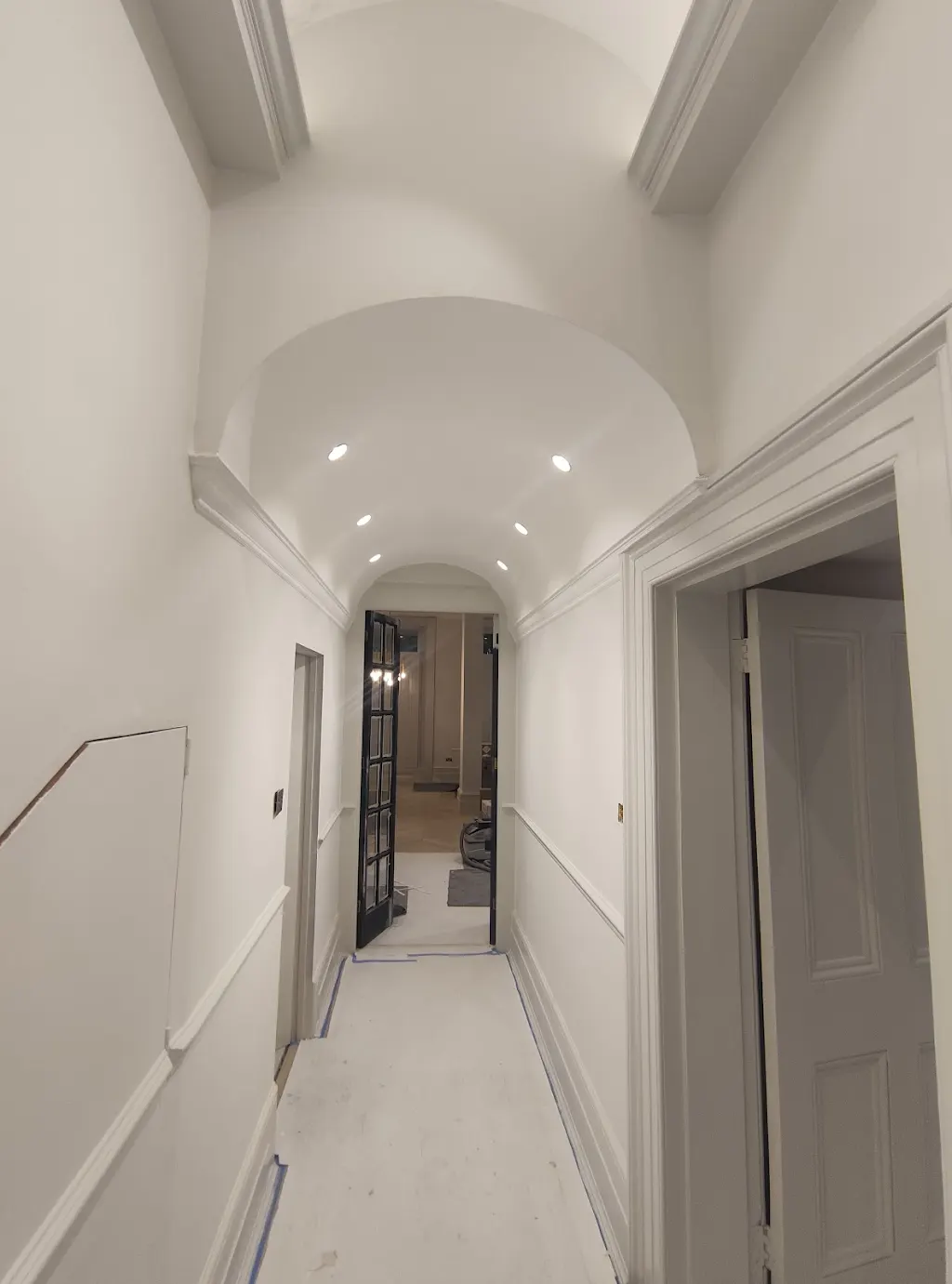
Most decorators will tell you that walls need to be smooth before they can be painted properly. That is true. What they do not always explain is that "smooth" does not always mean "fully replastered". The right answer depends entirely on the current condition of your walls — and there is a spectrum of options between a fresh skim coat and a simple fill and sand.
After 15 years of assessing London walls before decorating them, here is how I approach the question.
The Decision Framework: 4 Wall Conditions
Condition 1: Walls in good shape
Existing paint is sound, no cracks or damp, no peeling or flaking. Surface may just be dirty or dated.
What you need: Paint only. A clean, sand, and two topcoats. No plastering required.
Condition 2: Minor cracks and isolated damage
A few hairline cracks, one or two holes, perhaps some old picture hook damage or a previous repair that has shrunk. The overall surface is sound.
What you need: Fill and sand. Individual defects filled with fine surface filler, sanded flush, and primed. Plastering the whole wall would be overkill.
Condition 3: Multiple cracks, rough or uneven surface
Many hairline cracks spreading across the wall, uneven texture from previous paint build-up, patchy areas from old repairs, or a surface that has never been properly finished. Paint will highlight rather than hide these imperfections.
What you need: Skim coat. A thin 2–3mm layer of finish plaster over the existing surface creates a smooth, paint-ready substrate. This is usually more cost-effective than filling dozens of defects individually.
Condition 4: Structural issues, damp, or failed plaster
Hollow-sounding areas when tapped, large sections of plaster pulling away from the wall, active damp patches, or plaster that crumbles when probed. Skimming over failed plaster is a waste of money.
What you need: Full replastering after addressing the underlying issue (damp source, structural movement). Painting over failed plaster only delays the problem.
The Most Common London Wall Issues
Hairline cracks in Victorian and Edwardian homes
The most common issue in London period properties. Victorian and Edwardian lime plaster is flexible but moves with seasonal temperature changes, producing hairline cracks over time. If the cracks are superficial and stable (not growing), they do not indicate structural problems — they are a normal characteristic of old plaster.
For isolated cracks, fine surface filler and sanding is sufficient. For walls with many cracks spread across the whole surface, a skim coat gives a better result and is often the more economical option once you factor in the time to fill dozens of individual hairlines.
Textured ceilings (Artex)
Artex textured ceilings are extremely common in London homes built or renovated between the 1960s and 1990s. You do not need to remove Artex before painting — but if you want a smooth ceiling, the most effective solution is to skim plaster over it rather than scrape it off (which is messy and risks damaging the ceiling underneath).
Important: Artex installed before 1984 may contain chrysotile asbestos. It must be tested before any attempt to remove or aggressively disturb it. Skimming over undisturbed Artex is generally safe and avoids this issue entirely.
Walls after wallpaper removal
Stripping wallpaper almost always damages the surface underneath — either leaving adhesive residue, tearing the paper face of plasterboard, or pulling off patches of plaster. In most cases, walls stripped of paper need to be assessed before painting. Light damage can be filled and sanded; extensive damage usually warrants a skim coat for a proper result.
Painting directly onto a surface with old adhesive residue causes adhesion failure and an uneven finish. At minimum, a stabilising primer is needed; more often, skimming gives a far better outcome.
The Advantage of One Contractor for Both
Most painting and decorating firms do not offer plastering, and most plasterers do not decorate. Hiring separately means two site visits, two sets of fees, and the risk of one trade damaging the other's work. At Bozhiqi Painting & Decorating, Jetmir handles both plastering and decorating — assessing exactly what is needed, doing only the work required, and taking responsibility for the complete result from bare wall to finished surface. See our plaster-to-paint service for full details.
The Preparation Costs Explained
| Work type | Typical cost | When it is needed |
|---|---|---|
| Clean and sand walls | Included in painting quote | All walls before painting |
| Fill hairline cracks (per room) | £40 – £80 | Isolated cracks, good overall surface |
| Fill holes/damage (per repair) | £15 – £40 | Localised damage from fixings, impacts |
| Skim coat (per m²) | £15 – £25/m² | Many cracks, rough surface, post-wallpaper |
| Skim coat — average bedroom | £600 – £1,000 | Full room with 40m² wall area |
| Skim coat — ceiling only | £250 – £500 | Textured, cracked, or Artex ceiling |
| Full replaster (per m²) | £25 – £45/m² | Failed plaster, damp damage, structural issues |
Questions to Ask Before You Book
When getting quotes for a decorating project, ask each contractor directly:
Do my walls need any plastering work before painting, and if so, what specifically?
Are you able to carry out any plastering required, or will I need to source a separate plasterer?
What preparation is included in your painting quote?
How will you treat the walls after wallpaper removal?
What happens if you discover additional preparation needs once work has started?
A decorator who cannot answer these questions clearly — or who says all walls are fine without inspecting them — is worth approaching with caution. Preparation is where corners are cut, and a beautifully applied topcoat over a poorly prepared surface will not last.
For further reading on our plastering services, visit the plastering service page. We cover plastering and decorating projects across Southgate, Streatham, Mitcham, and throughout London.
Frequently Asked Questions
Not Sure What Your Walls Need?
A free site visit gives you a definitive answer. Jetmir will assess your walls, tell you exactly what preparation is needed, and provide a fixed-price quote covering everything from bare wall to finished surface. 9.78/10 on Checkatrade from 55 reviews on Checkatrade.